

01

Fish street
Interaction design · Eight-week group project with Vasakronan · Gothenburg, 2026
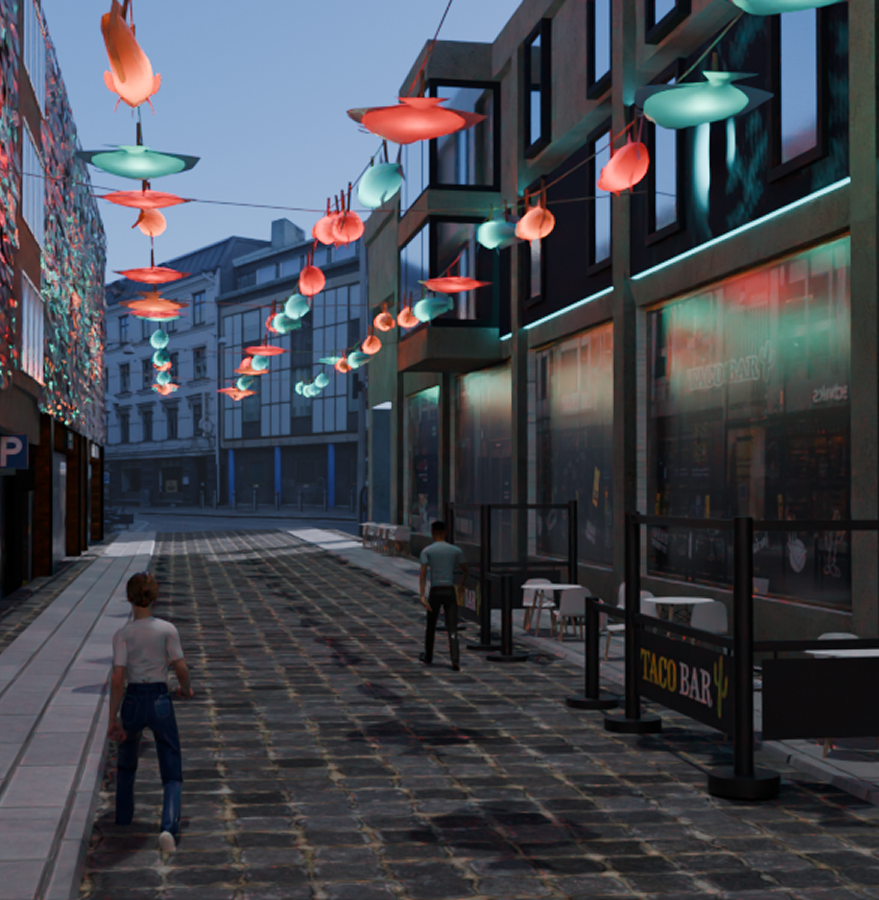
What would make someone stop on a street they usually walk straight through? In collaboration with Vasakronan, our group reimagined a section of Kyrkogatan in central Gothenburg as Fish Street: a public space shaped by light, movement and playful interaction.
Inspired by Gothenburg’s connection to the sea, we proposed fish lanterns, reflective façade elements, a responsive light installation and places to play. Together, these elements were intended to give the street a distinct identity and invite pedestrians to explore it. We presented the concept through physical prototypes, a small-scale exhibition environment and a VR experience of the redesigned street.

01
02

Understanding the street
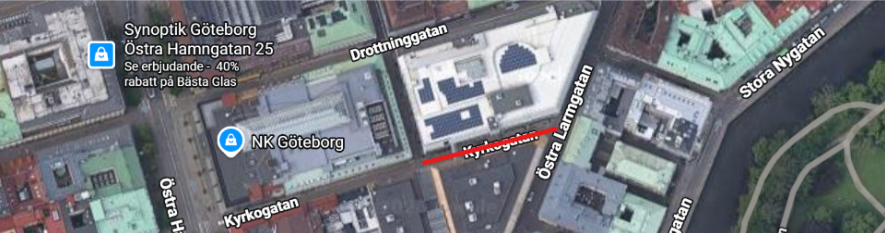
We chose the eastern section of Kyrkogatan for its mix of constraints and opportunities. It connects to busier streets, yet our site visit found a space that felt dark and easy to pass without noticing. The street also needed to keep working for pedestrians, shops, deliveries and vehicles.
These conditions shaped where we could place each idea. Shopfronts limited what we could add at street level, while the façades and space overhead offered room for installations. Our challenge was to make the street more inviting without obstructing its existing use.
02
designing fish street
03
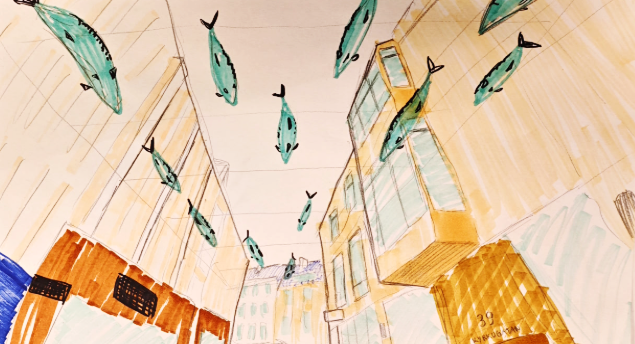
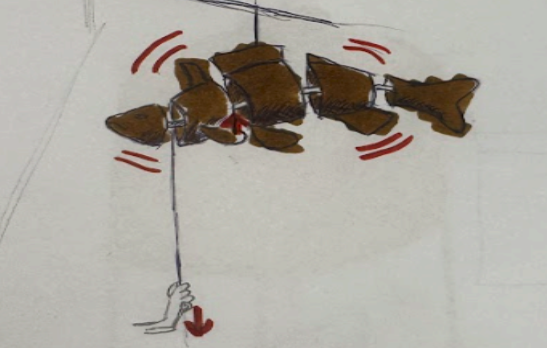
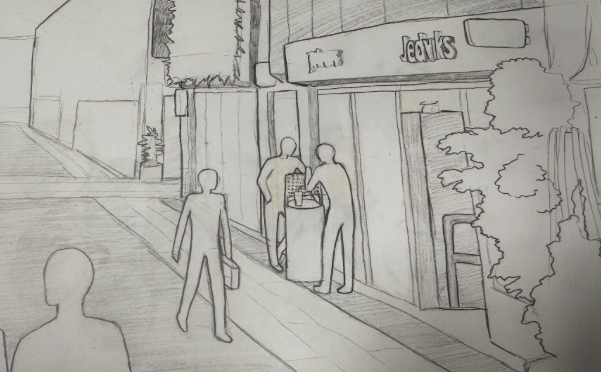
The marine theme became a way to connect several different experiences into one proposal. Suspended fish lanterns would bring colour and light above pedestrians, particularly after dark. On one façade, individually moving reflective scales were intended to catch sunlight and create changing patterns across the street.
We also proposed a wall inspired by mareld, bioluminescent plankton. It would respond to pedestrians’ movement, allowing people to encounter the installation while walking past. Fish-themed games offered a more deliberate reason to stop and spend time together. As a group, we continued to develop these ideas and plan their positions around the street’s existing functions.
The installations were presented at different levels of development. For example, the exhibition used a projection to demonstrate the proposed Mareld interaction; it was not a completed motion-responsive installation on Kyrkogatan.
03
04
Visualising the experience
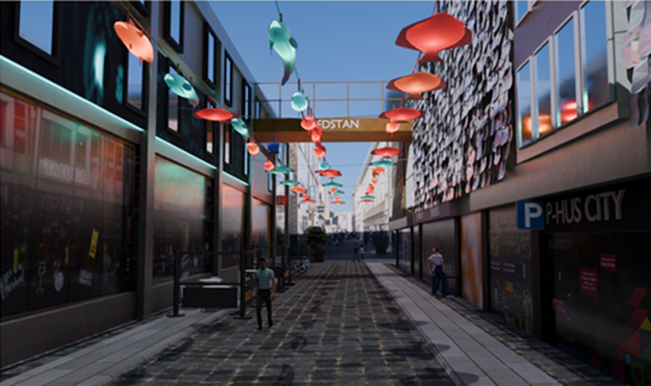
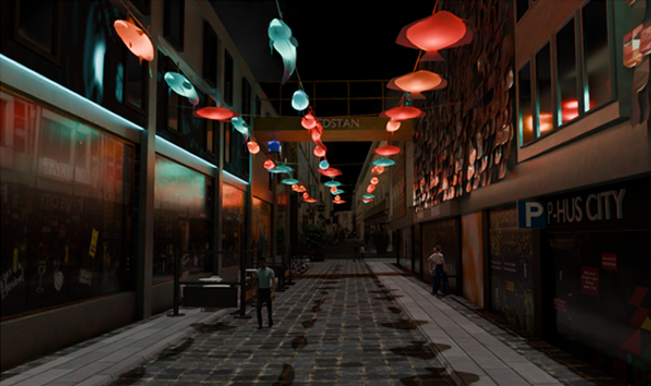
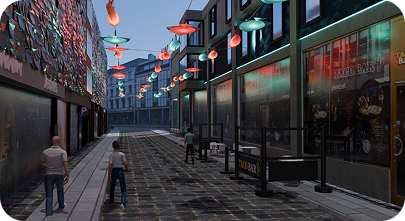
My main individual responsibility was creating a 3D model of the redesigned street in Blender. I brought together the group’s ideas in one environment so that visitors could see how the installations might work as a whole, rather than only as separate prototypes.
I rendered 360-degree views and used them in Unity to create a VR experience for the exhibition. Visitors could look around Fish Street in both daytime and nighttime conditions. Working under a tight deadline meant planning how much time to spend on modelling, materials and animation so that the full environment would be ready to present.
04
Exhibition & response
05
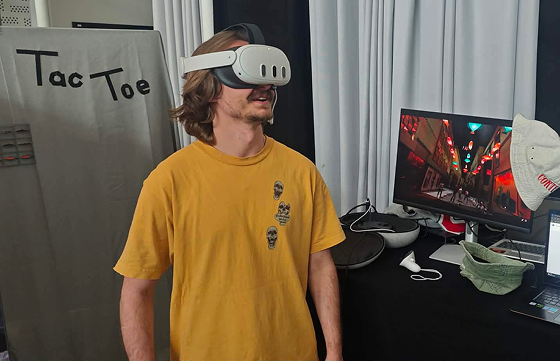
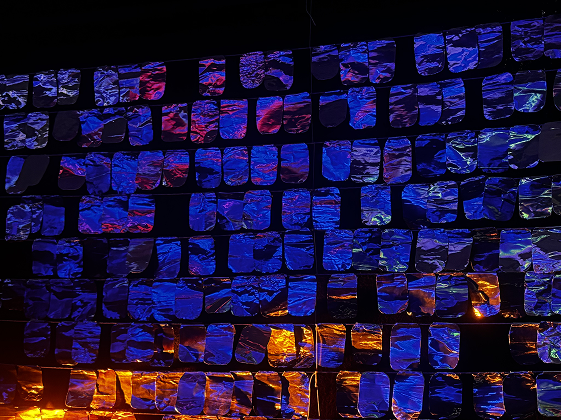
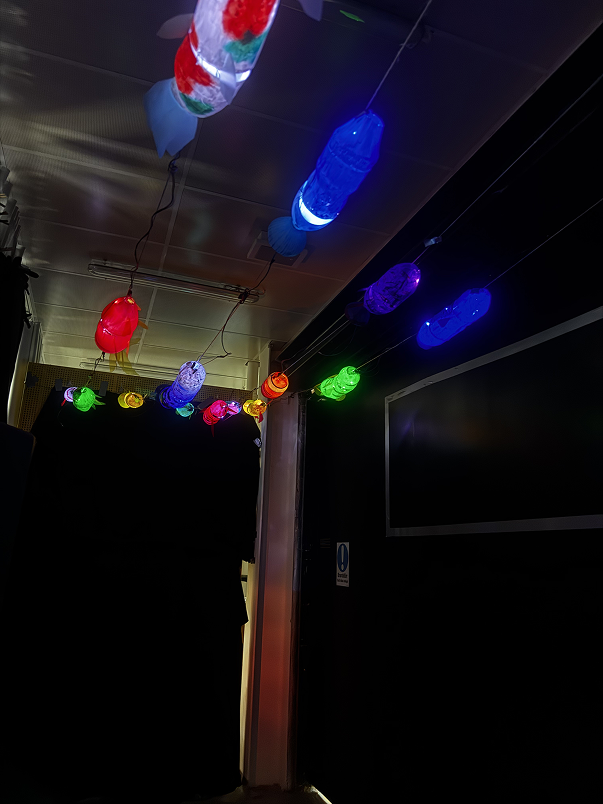
At the exhibition, visitors moved through a small-scale interpretation of the street, saw the physical prototypes, could try the games and could experience the full proposal in VR. Afterwards, they answered a survey about how well the concept suited Kyrkogatan and whether it would make them more inclined to visit.
Responses were generally positive. Visitors particularly mentioned the lighting, reflections and atmosphere as engaging. Some suggested adding seating or more direct ways to interact with the installations. The feedback helped us see both the strength of the street’s visual identity and where the concept could develop further. Because visitors experienced an exhibition rather than a built intervention on Kyrkogatan, their responses indicate interest in the proposal, not a measured change in how the street is used.
05
06
My contribution and learnings
Throughout the project, I contributed to brainstorming, ongoing concept development and discussions about the street layout. My individual focus was building the Blender environment and preparing the Unity VR experience that brought the group’s ideas together at street scale.
This was a useful exercise in planning visual work under a short deadline. Shading took less time than I had expected, while animation took longer. I learned to give those stages their own time estimates instead of treating the 3D model as one task. Looking back, I would also consider more senses from the beginning. That could have made the proposed experience more inclusive as well as more immersive.
Explore the full process and gallery on the Fish Street project website.
06

Group projects
Individual projects
About me
Home
Contact
Urban design
Interaction
design
Playful
placemaking
Fish street
Fish Street reimagines a street in Gothenburg with playful installations and lighting that invite people to explore and interact.
Fish street
Concept
design
Industrial
design
Systems
thinking
The first & the last
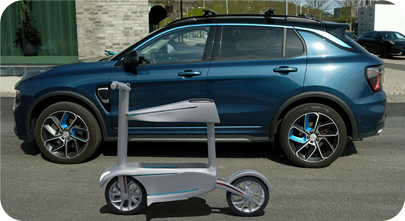
A speculative micromobility concept for 2030, designed to extend the Lynk & Co car experience and solve first- and last-mile urban transportation.
The first & the last
Interaction
design
User studies
3D-modeling
Social Gothenburg
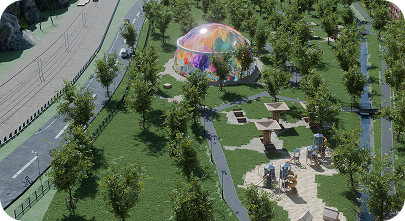
The goal was to design something for a set location in gothenburg, and find a way of making people socialise and connect with each other.
Social Gothenburg
Usability
User testing
Figma
Whitelines
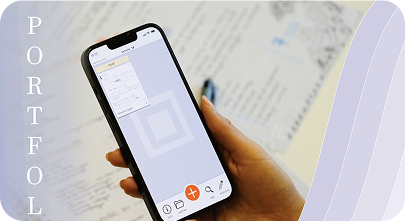
A project where we found issues with an existing interface and through user testing, made a redesign that was more efficient and less confusing.
Whitelines
Prototyping
Interaction
design
User testing
Amica
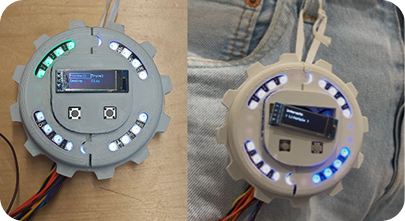
A personal gadget to assist in finding friends with similar interests as yourself. The theme was wearable and social.
Amica
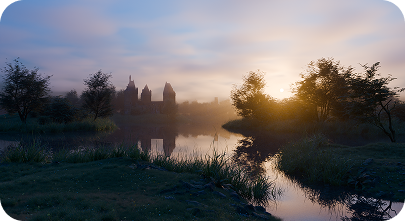
Blender
Scene setup
Geometry nodes
Environments
Doing landscapes was how i learned blender. I started of by copying a guide and with the later landscapes started doing some things of my own.
Environments
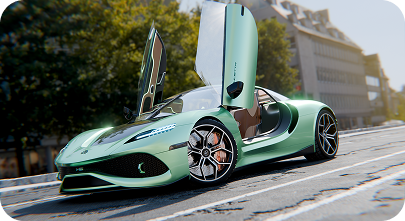
Blender
Scene setup
3D modeling
Car
My biggest 3D modeling project where I modeled each surface of the exterior and interior of a car and made renders with hdri enviornments.
Car
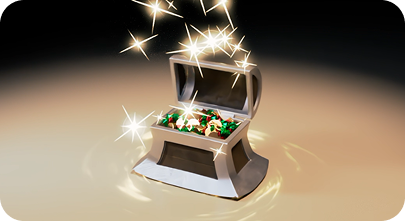
Houdini
2D animation
VFX
Fun things
Some fun things from courses where I learned 2D animation and Houdini.
Fun things
Fish street
