

01

Social Gothenburg
Public space concept · Group project · Opalparken, Gothenburg
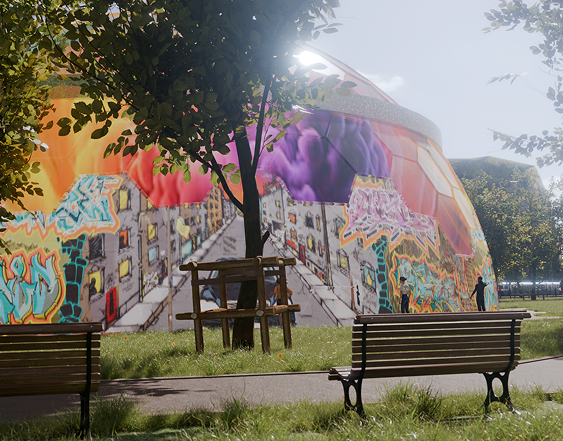
How could a park become a place where people create something together? Our group developed Opalis Dome, a proposed shared art space in Opalparken, Tynnered. The idea was that visitors could add to drawings that move between participants, gradually creating collaborative artwork to be displayed on the dome.
I contributed to ideation and evaluation throughout the project. I was also one of two group members who created the surrounding 3D environment in Blender, placing the proposed dome in a visualisation of its intended setting.

01
02

Ethnography study
We began by observing Opaltorget and Opalparken and speaking informally with people in the area. The park offered an accessible, pleasant setting, but our observations and conversations suggested that it did not always give people a reason to stay. We looked for an activity that could invite interaction across different ages without limiting the park to one group.
Our early ideation explored several ways to make the area more social. We chose to develop a shared creative activity and a structure that could make that activity visible within the park.
02
Ideation & evaluation
03
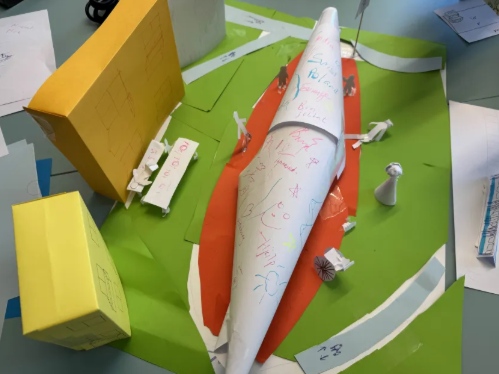
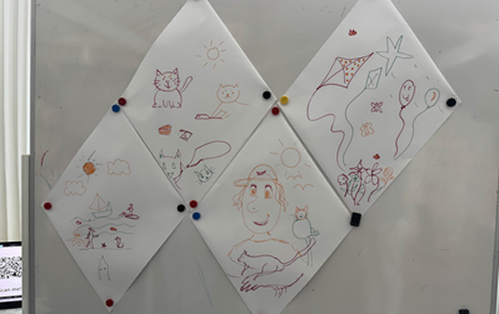
The group moved from sketches and a paper model of the park to a simple prototype of the drawing interaction. Diamond-shaped sheets of paper represented surfaces that would move between participants. Each person drew for a short period before passing the work on, allowing someone else to continue it.
Fifteen people tried this activity across four evaluation sessions. Participants described how drawing together gave them something to talk about, while their feedback also raised questions about the timing, the possibility of taking part alone and whether the end of the experience felt rewarding. Testing with paper gave us concrete interaction feedback before the proposed dome or its surroundings were developed further in 3D.
03
04
Final result
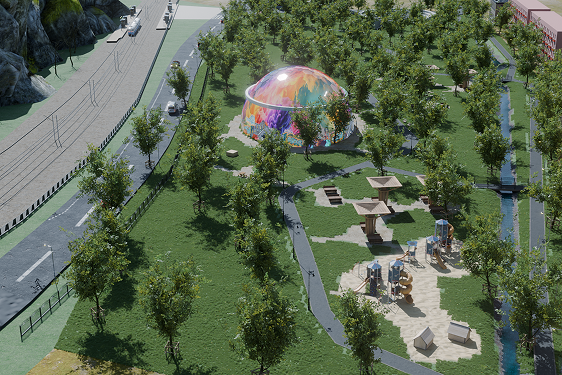
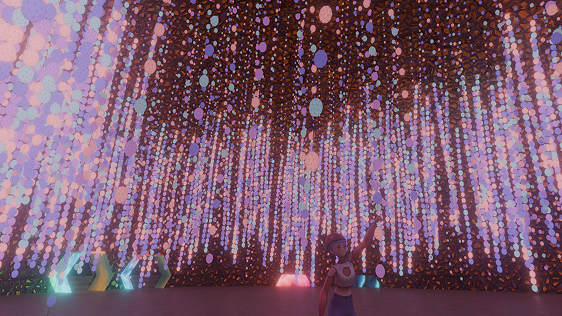
Opalis Dome became a visual proposal for a place to create and gather in Opalparken. The concept combined the collaborative drawing activity with an exterior that could display the resulting artwork. Later iterations also explored the dome as a space for other events and activities, with seating around it to connect it to the park.
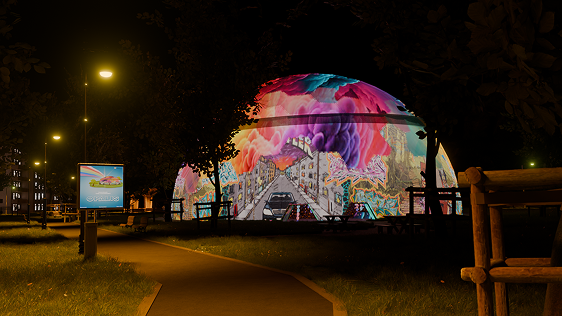
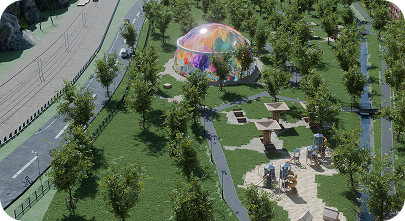
Together with another group member, I built the surrounding environment in Blender. We placed the dome within a model of the park and developed views that showed its relationship to paths, greenery and nearby transport. We also made day and night visualisations to communicate how the place could feel under different conditions.
A later, smaller evaluation indicated that participants responded well to the appearance of the proposal. Their ideas about further interactions varied, so those parts still needed exploration. The visualisations communicated a possible future for Opalparken; the dome itself was not built or evaluated in the park.
04
05
Key outcomes and learnings
Building the 3D environment with another group member taught me to coordinate work within a shared scene. We needed to make decisions about the scale, level of detail and how separate parts of the environment would come together in the final views.
The evaluation changed how I think about prototypes. Even a simple paper activity let us observe what people did together and hear where the experience became unclear or less satisfying. I learned to choose the form of a prototype based on the question we need to answer: paper can help test an interaction early, while a detailed 3D environment can help people discuss how a proposal relates to its physical setting.
05

Group projects
Individual projects
About me
Home
Contact
Urban design
Interaction
design
Playful
placemaking
Fish street
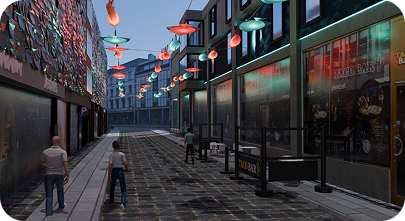
Fish Street reimagines a street in Gothenburg with playful installations and lighting that invite people to explore and interact.
Fish street
Concept
design
Industrial
design
Systems
thinking
The first & the last
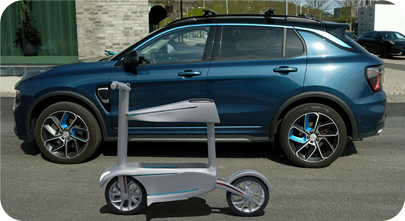
A speculative micromobility concept for 2030, designed to extend the Lynk & Co car experience and solve first- and last-mile urban transportation.
The first & the last
Interaction
design
User studies
3D-modeling
Social Gothenburg
The goal was to design something for a set location in gothenburg, and find a way of making people socialise and connect with each other.
Social Gothenburg
Usability
User testing
Figma
Whitelines
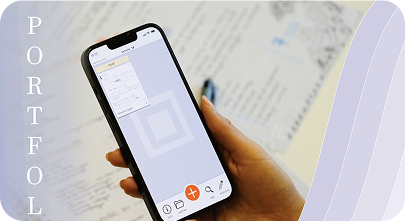
A project where we found issues with an existing interface and through user testing, made a redesign that was more efficient and less confusing.
Whitelines
Prototyping
Interaction
design
User testing
Amica
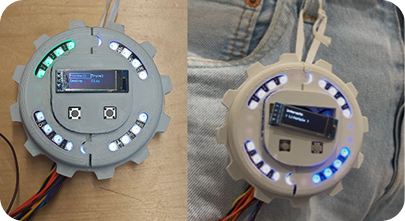
A personal gadget to assist in finding friends with similar interests as yourself. The theme was wearable and social.
Amica
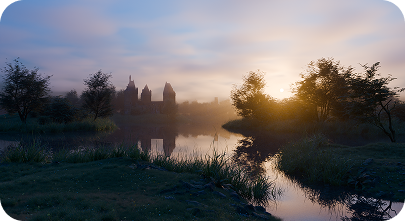
Blender
Scene setup
Geometry nodes
Environments
Doing landscapes was how i learned blender. I started of by copying a guide and with the later landscapes started doing some things of my own.
Environments
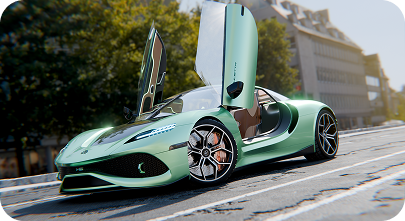
Blender
Scene setup
3D modeling
Car
My biggest 3D modeling project where I modeled each surface of the exterior and interior of a car and made renders with hdri enviornments.
Car
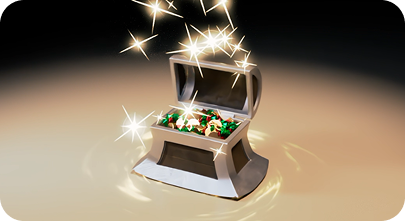
Houdini
2D animation
VFX
Fun things
Some fun things from courses where I learned 2D animation and Houdini.
Fun things
Social Gothenburg
