

01

The First & the Last
Bachelor’s thesis in Industrial Design Engineering · Group project with Lynk & Co Design · 2030 mobility concept
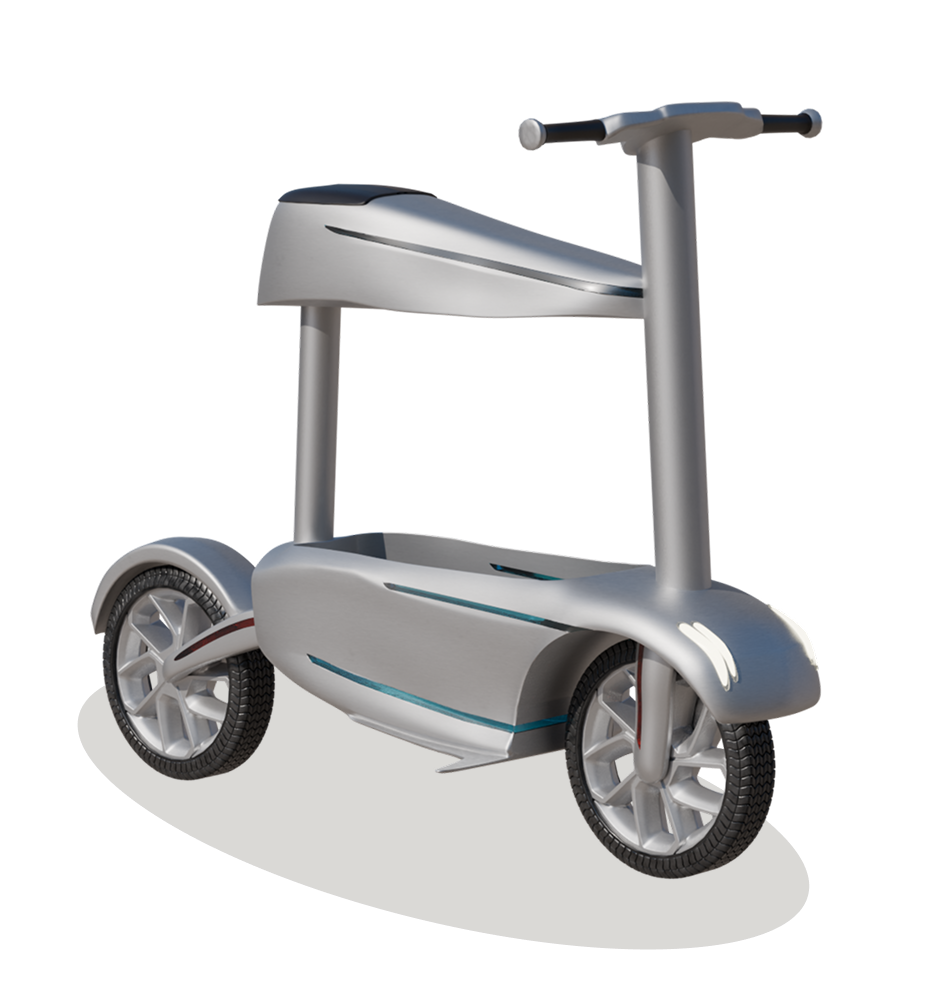
How might a car journey continue when the car cannot take you all the way to your destination? In our bachelor’s thesis, we explored micromobility as an extension of a Lynk & Co car. This resulted in LynkLyte, a concept for a foldable electric scooter that could be stored and charged in the car’s trunk, then used for the final part of a journey.
The brief called for an inspiring vision of mobility in 2030 while still considering how the vehicle might work. My work spanned the group’s research and concept development, and I took responsibility for learning Blender and creating the final 3D visualization.

01
02

Research
We began by exploring how changes in European cities could affect journeys that combine cars with other forms of transport. We also asked Lynk & Co members informal questions through social media about their cars and their views on micromobility. Comfort, safety and the ability to carry belongings emerged as relevant considerations.
Rather than treating these findings as a prediction of what cities will be like in 2030, we used them to build a design scenario: someone drives towards a city, parks, and needs a practical way to travel the remaining distance. That scenario gave us a way to assess ideas against a specific journey and its everyday demands.
02
Ideation & process
03
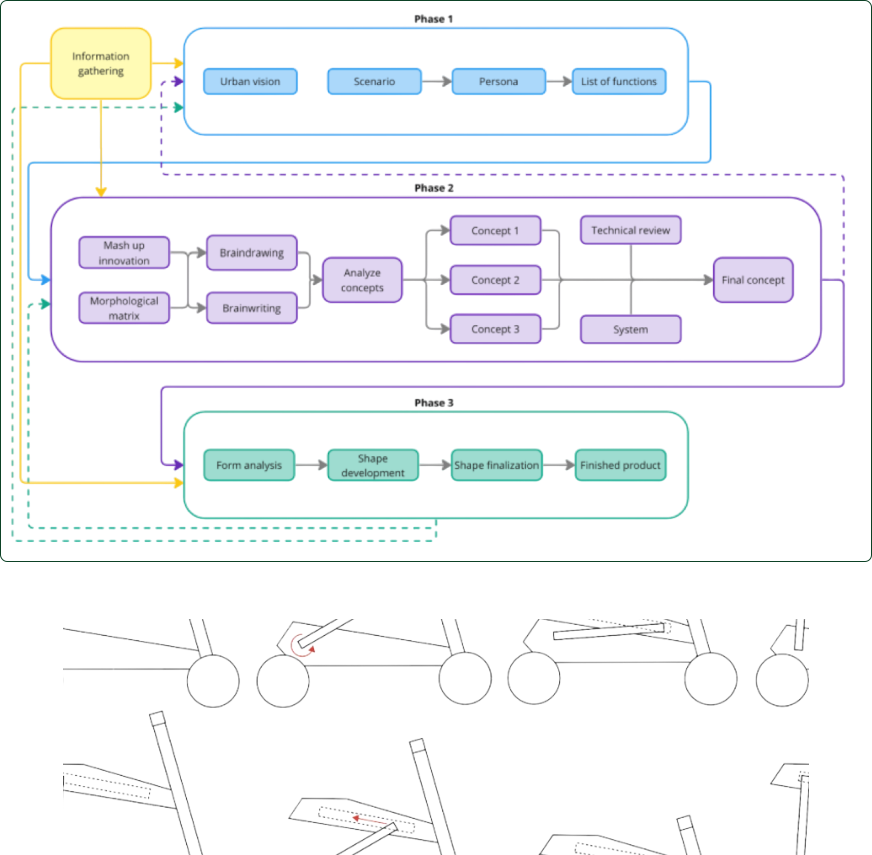
We explored several directions through sketches, brainwriting, brain drawing and combinations of possible features. The alternatives helped us test what mattered most: a comfortable ride, room for a bag, and a vehicle compact enough to fit in the car.
The concepts were compared with the scenario and the project’s requirements, then combined and refined. The resulting design brought together a seat, a luggage compartment and folding parts. Its proportions had to address a central tension in the brief: making the scooter useful when riding it and compact when storing it.
03
04
Final result
LynkLyte is a concept for a seated electric scooter designed to travel in the trunk of a Lynk & Co car. At the end of a car journey, it can be unfolded for the remaining distance. The concept includes a storage area for belongings such as groceries or a sports bag, making it useful for more than a trip directly from the car to a workplace.
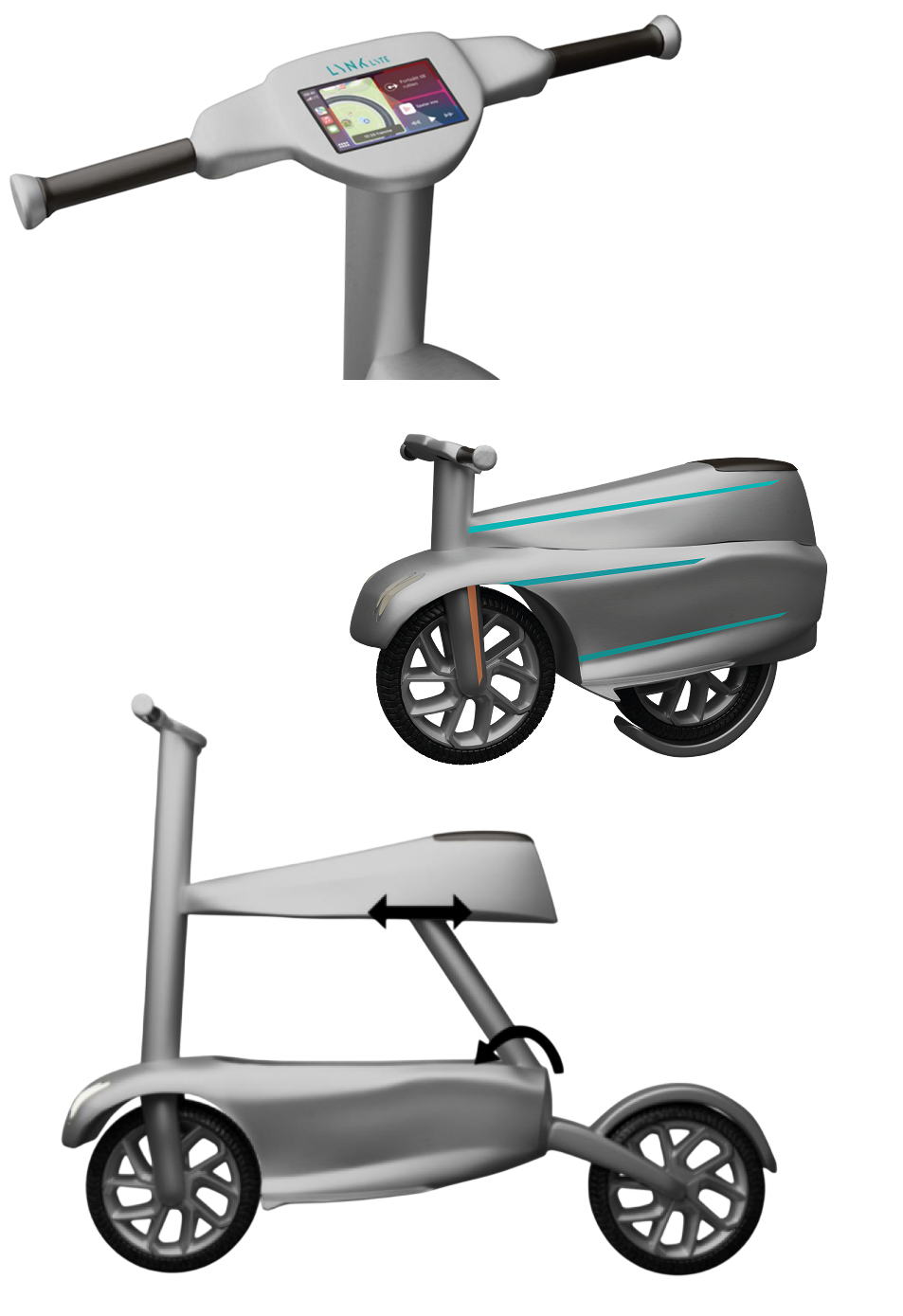
Fitting the scooter in the car while keeping it comfortable to ride shaped several design decisions. The steering column and seat lower towards the main body, while the rear wheel folds inwards to reduce its length. The luggage area sits low in the vehicle and had to be considered alongside the space needed for the folded wheel. These features were developed as part of the concept, although the mechanisms would need further technical development and testing.
The form was designed to connect LynkLyte to Lynk & Co’s cars without simply copying a car at a smaller scale. We studied the brand’s shapes and details, then adapted them to the scooter’s proportions and functions. I created the final 3D model and visualizations in Blender, showing its form, its folded state and how it could appear in use. The finished work gave Lynk & Co an illustrated proposal to discuss and develop further.
04
05
Key outcomes and learnings
This project changed how I use scenarios in design. Our 2030 scenario gave the team a shared direction, but we returned to it and adjusted it as we learned more. I also learned to work between two different expectations: creating a speculative concept that could inspire Lynk & Co while giving enough attention to function and technical questions for a bachelor’s thesis.
Taking responsibility for the Blender visualization meant learning a new tool during a group project. It made me more aware of how closely visual work depends on communication with the rest of the team: the model needed to represent decisions we had made together, not just look convincing. The experience also made me want to develop my 3D modelling skills further.
05

Group projects
Individual projects
About me
Home
Contact
Urban design
Interaction
design
Playful
placemaking
Fish street
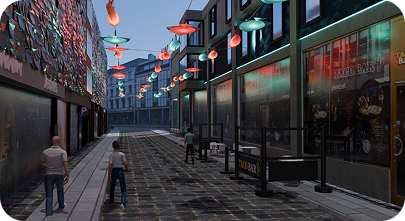
Fish Street reimagines a street in Gothenburg with playful installations and lighting that invite people to explore and interact.
Fish street
Concept
design
Industrial
design
Systems
thinking
The first & the last
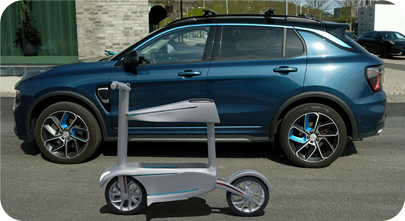
A speculative micromobility concept for 2030, designed to extend the Lynk & Co car experience and solve first- and last-mile urban transportation.
The first & the last
Interaction
design
User studies
3D-modeling
Social Gothenburg
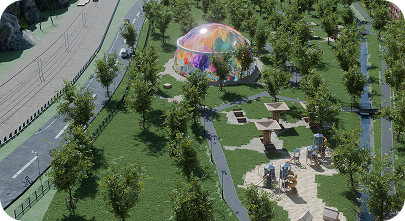
The goal was to design something for a set location in gothenburg, and find a way of making people socialise and connect with each other.
Social Gothenburg
Usability
User testing
Figma
Whitelines
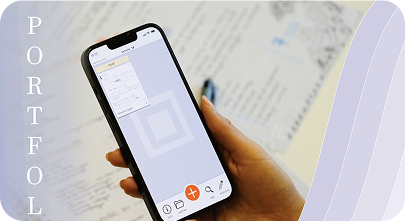
A project where we found issues with an existing interface and through user testing, made a redesign that was more efficient and less confusing.
Whitelines
Prototyping
Interaction
design
User testing
Amica
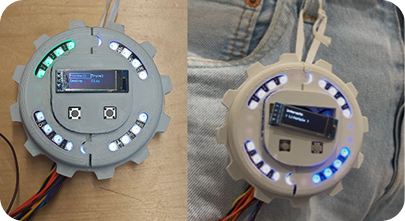
A personal gadget to assist in finding friends with similar interests as yourself. The theme was wearable and social.
Amica
Blender
Scene setup
Geometry nodes
Environments
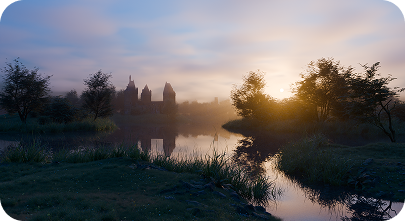
Doing landscapes was how i learned blender. I started of by copying a guide and with the later landscapes started doing some things of my own.
Environments
Blender
Scene setup
3D modeling
Car
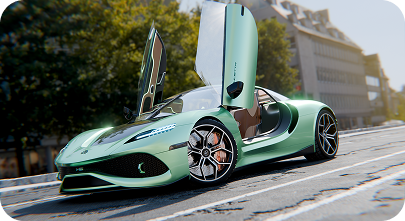
My biggest 3D modeling project where I modeled each surface of the exterior and interior of a car and made renders with hdri enviornments.
Car
Houdini
2D animation
VFX
Fun things
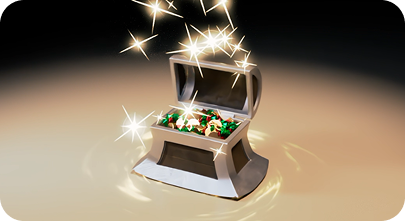
Some fun things from courses where I learned 2D animation and Houdini.
Fun things
The First & the Last
